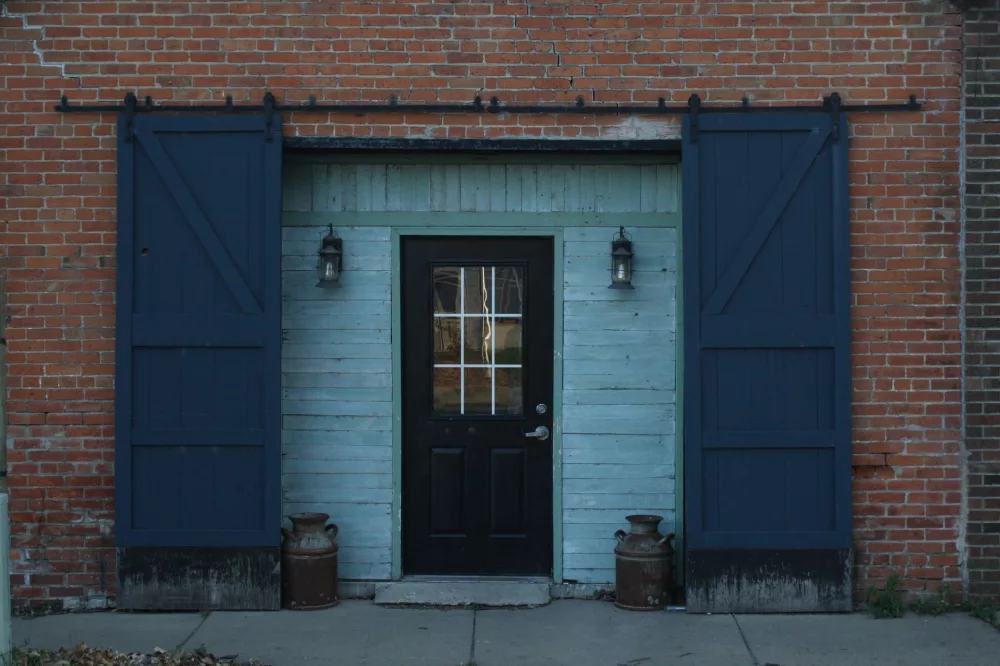
My Journey into the World of Barn Door Hardware
You know, there’s something undeniably captivating about a barn door. It’s more than just a way to open and close a room; it’s a statement, a nod to rustic charm or sleek modernism, depending on how you dress it up. For me, that fascination truly took root when my wife and I decided to revamp our tiny laundry closet. We needed something that wouldn't swing out and block our narrow hallway, and a barn door seemed like the perfect, stylish solution. But then came the big question, the one that probably brought you here: "What exactly is a barn door hardware kit?"
I remember standing in the aisle of a home improvement store, staring at a wall of boxes, each promising to deliver the look I wanted. It felt a little overwhelming, frankly. There were so many options, so many different prices, and a dizzying array of components. I figured, if I was going to invest in this, I ought to understand every little bit of it. So, let me walk you through what I learned, sharing some of the insights and 'aha!' moments I had along the way.
Breaking Down the Kit: What's Inside That Box?
At its core, a barn door hardware kit is a collection of components designed to allow a door panel to slide horizontally along a track, rather than swing on hinges. It's really that simple, but the quality and style of those components can make all the difference. When you crack open that box, you'll typically find a few key players:
- The Track: This is the backbone of the whole operation. It’s a long, sturdy bar, usually made of steel or iron, that mounts to your wall. The door hangs from it, and its length needs to be at least twice the width of your door for it to open fully. I learned this the hard way when I almost bought a track that was just a smidgen too short for the door we picked out. Always, always double-check your measurements!
- Hangers & Rollers: These are the things that actually attach to the top edge of your barn door. They have wheels (the rollers) that glide along the track. You'll usually get two of these. The design of these hangers can drastically change the aesthetic of your door – some are chunky and rustic, others slim and contemporary.
- Floor Guide: This small, but mighty, component is installed on the floor, usually at one end of the door's travel path. It keeps the bottom of the door from swinging out from the wall as it slides. It's a subtle piece, but without it, your door would be wobbly and pretty impractical.
- Door Stoppers: These little gizmos attach to each end of the track. Their job is to prevent the door from rolling right off the end of the track. Seems obvious, but you wouldn't want your beautifully installed door crashing down, would you?
- Anti-Jump Discs: These are small, round discs that attach to the top edge of your door, just above the track. They have a little lip that prevents the rollers from jumping off the track if the door gets bumped or lifted. A clever bit of engineering, I think.
- Spacers (or Stand-off Brackets): These create a small gap between the wall and the track. This gap is important because it ensures your door (which usually isn't perfectly flat) doesn't rub against the wall as it slides.
- Fasteners: All the necessary screws and bolts to attach everything securely. Always a good idea to make sure you have the right tools before you start.
Why Even Consider a Barn Door? Beyond Just Good Looks!
Okay, so we all agree barn doors look cool, right? But I quickly realized they offer some really practical advantages, especially in smaller homes or tricky layouts. For our laundry area, for instance, a traditional swinging door would've taken up precious floor space and constantly felt like it was in the way. A barn door, because it slides parallel to the wall, saves a ton of room. It’s also just a really unique way to define a space, adding character where a standard door might just blend in. I've seen them used beautifully for:
- Pantry doors in a farmhouse kitchen.
- Separating a bedroom from an en-suite bathroom (though privacy can be a consideration).
- Covering an entertainment center or media nook.
- As a stylish room divider in an open-concept living area.
They really open up design possibilities!
Material Matters: What’s Your Style Saying?
When I was looking at kits, I noticed the materials varied quite a bit, and they definitely influence both the aesthetic and the durability. Most commonly, you’ll find: