The Genesis of a Modern Icon
I remember when I first heard about the Ineos Grenadier; it was a whisper of a project born from necessity, a passion project really. Sir Jim Ratcliffe, a self-proclaimed admirer of classic, no-nonsense 4x4s, wasn't just looking to fill a gap in the market. He was aiming to recapture a spirit, a functional purity that felt like it had been lost amidst ever-increasing creature comforts and complex electronics in modern off-roaders. For me, that spoke volumes. It wasn't about simply building another SUV; it was about engineering a tool, a robust workhorse designed to go anywhere and do anything, without fuss.
The concept was refreshingly simple: build a rugged, dependable, and highly capable off-road vehicle from the ground up. This isn't some repurposed crossover with chunky tires; no, this is a dedicated machine built on a ladder frame chassis with solid beam axles – design choices that are undeniably old-school but brilliantly effective for serious terrain. It's a vehicle that isn't afraid to get dirty, and that, I think, is its core appeal.
Design Philosophy: Function Over Form
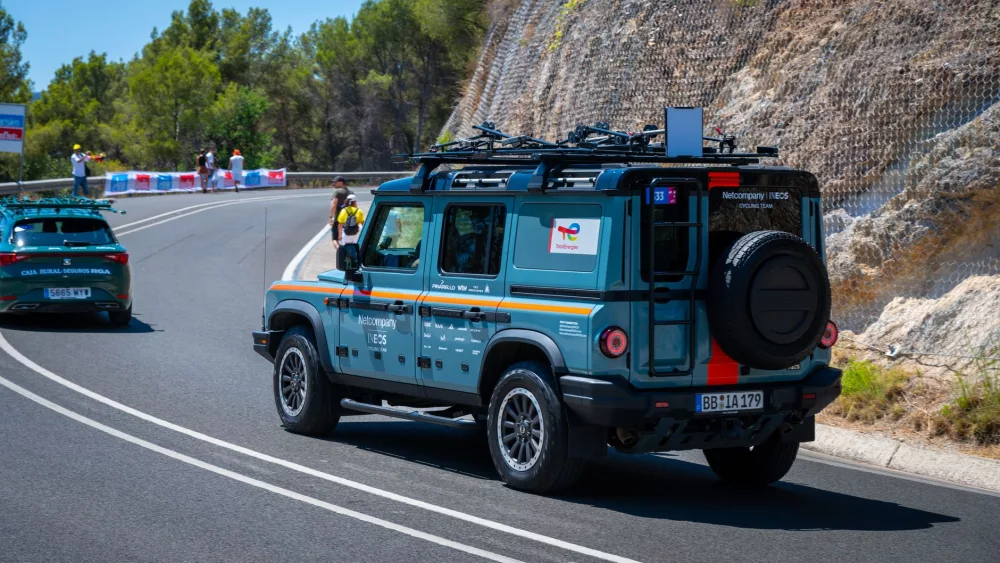
What immediately grabs your attention with the Grenadier is its unapologetic utilitarian aesthetic. It's boxy, muscular, and has an almost military-grade presence. When I first saw one in person, I was struck by its straightforward lines. There are no unnecessary curves or flashy elements. Every panel, every light, every hinge seems to serve a direct purpose. This design language is a clear nod to the legendary 4x4s of yesteryear, vehicles celebrated for their reliability and capability rather than their aerodynamic efficiency or sleek profiles.
“The Grenadier’s design speaks volumes about its intent: it’s built to be used, to be worked, and to endure.”
I appreciate how Ineos didn't try to reinvent the wheel here. They observed what worked, what lasted, and what was genuinely useful in extreme environments, then integrated modern manufacturing techniques and component reliability. The exposed door hinges, for instance, aren't just for show; they signify ease of replacement and maintenance, a thoughtful touch for expedition users. You'll find practical details like integrated roof rails and utility belts on the doors – little things that scream 'adventure ready' rather than 'mall crawler'.
Under the Hood: Power and Reliability
Powering this beast are well-regarded BMW engines, a smart choice if you ask me. Ineos opted for proven, inline six-cylinder units: a 3.0-liter turbo-petrol and a 3.0-liter twin-turbo diesel. These aren't just powerful; they're known for their smoothness and, crucially, their reliability – a non-negotiable for a vehicle meant to operate far from the nearest service station. Paired with a robust ZF eight-speed automatic transmission and a permanent four-wheel-drive system, the powertrain combination is incredibly potent. My experience with these BMW engines in other applications suggests they're more than up to the task.
- Petrol Engine: A 286 PS (282 hp) inline-six that delivers impressive torque, making it responsive both on and off-road.
- Diesel Engine: A 249 PS (245 hp) twin-turbo inline-six, offering prodigious low-end torque crucial for crawling over obstacles and towing heavy loads.
The standard inclusion of a two-speed transfer case means you have proper high and low range gearing, a fundamental requirement for serious off-roading. It’s got mechanical locking differentials front, center, and rear too, which, let's be honest, is something many vehicles in this class skip, much to their detriment in truly challenging situations. This commitment to mechanical prowess rather than relying solely on electronic wizardry is a big win for me.
Chassis and Suspension: Built for Battle
Here’s where the Grenadier truly distinguishes itself. It rides on a full box-section ladder frame chassis, which is the bedrock of its toughness. This design offers immense torsional rigidity, essential for maintaining body integrity and controlling suspension geometry when the terrain gets nasty. What’s more, it features heavy-duty five-link suspension with progressive-rate coil springs at all four corners, complemented by massive Eibach dampers.
I can tell you, looking at the setup, it’s designed for maximum articulation and durability. Solid beam axles, often considered archaic by mainstream automotive standards, are incredibly strong and provide consistent ground clearance regardless of wheel articulation. This is a huge advantage off-road. It’s not about how quickly you can take a corner on asphalt; it’s about how much abuse the suspension can soak up without breaking, and how effectively it keeps the wheels in contact with uneven ground. From my perspective, they got this absolutely right.
Interior: Practicality Meets Modernity
Stepping inside the Grenadier, you're greeted by an interior that manages to be both rugged and surprisingly modern. It’s a fascinating blend. The physical switches are large and clearly labeled, designed to be operated with gloved hands. I particularly like the overhead console, reminiscent of an aircraft cockpit, housing auxiliary switches for external accessories like spotlights or winches. It's wonderfully tactile and functional.
The seats are Recaro, offering excellent support and comfort for long journeys, both on and off the beaten path. While the materials feel robust and hard-wearing, there are also touches of modern tech, including a 12.3-inch infotainment screen that integrates Apple CarPlay and Android Auto. Ineos has also included a compass, altimeter, and a 'wading depth indicator' – digital tools that are genuinely useful when you're far from civilization. There's a drain plug in the floor, too, for easy hosing out after muddy adventures, which is a detail I absolutely adore; it shows they understand their target audience.
Uncompromising Off-Road Capability
This is where the Grenadier truly shines. Its specifications speak for themselves: a healthy 264mm (10.4 inches) of ground clearance, a 35.5-degree approach angle, a 28.2-degree breakover angle, and a 36.1-degree departure angle. It also boasts an impressive wading depth of 800mm (31.5 inches). These numbers aren't just figures on a spec sheet; they translate directly into real-world capability.
What impressed me most during my research was the attention to detail in its off-road engineering. Things like the protective underbody skid plates, the strategically routed exhaust and wiring, and the availability of a winch pre-installation kit. It's clear that this vehicle was conceived by people who genuinely understand what it takes to tackle challenging terrain. You don't get the feeling that off-road modes are merely software gimmicks here; the underlying hardware is supremely capable.
A Niche Masterpiece?
The Ineos Grenadier isn't for everyone, and that's precisely its strength. It’s not a crossover masquerading as an off-roader, nor is it a luxury SUV with rugged pretensions. It’s an honest, purpose-built machine for those who demand uncompromising durability and capability. It fills a very specific void in the market, catering to adventurers, overlanders, farmers, and anyone who needs a vehicle that won't flinch when the going gets tough. I believe it's a refreshing return to form for the utilitarian 4x4, proving that sometimes, the best way forward is to revisit proven principles and execute them with modern precision.