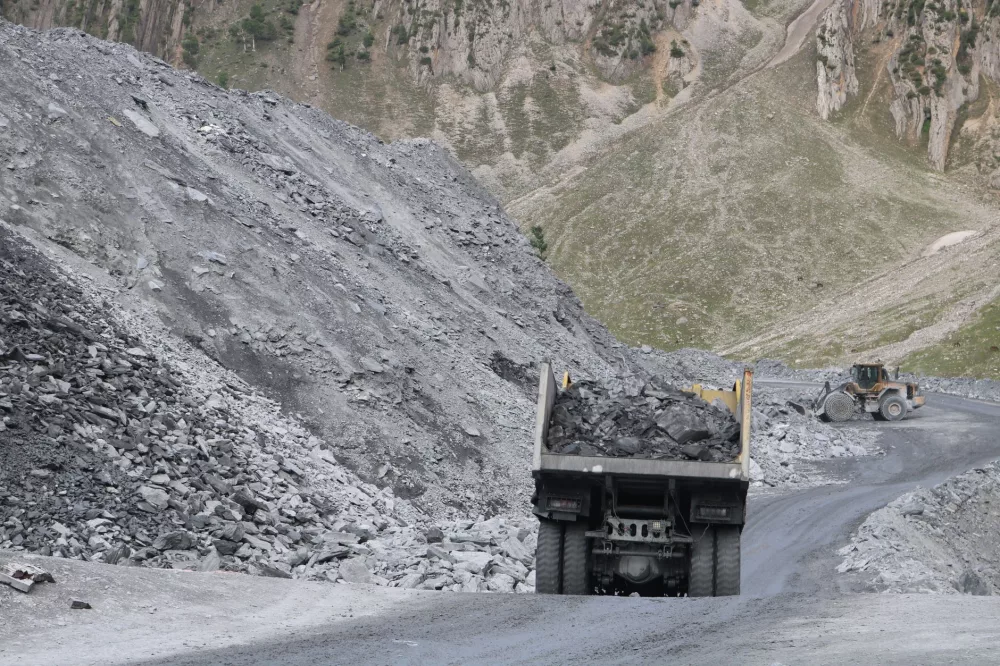
When we think about construction materials, slate often brings to mind beautiful roofs, elegant flooring, or striking architectural features. What many don't often consider is the intricate, often challenging journey that this robust natural stone undertakes from the quarry face to its final destination. This is where the 'slate truck' enters the picture – a specialized vehicle that's an absolutely essential component in the global slate industry. It's not just any heavy-duty truck; it's a precisely engineered machine designed to handle the unique demands of transporting one of Earth's oldest building materials.
Understanding the Mission of a Slate Truck
Imagine massive, heavy slabs of rock, often irregularly shaped, needing to be moved over rough terrain, sometimes up steep inclines, and then carefully delivered. This isn't a job for your standard flatbed. A slate truck isn't merely a transport vehicle; it's an integral part of the logistics chain, built to contend with the incredible weight, inherent fragility, and sometimes awkward dimensions of natural slate. I've always found it fascinating how specialized equipment evolves to meet very specific industry needs, and the slate truck is a prime example.
The Evolution of Slate Transport
Historically, moving slate was a monumental task, relying on brute force, animal power, and eventually, rudimentary rail systems or narrow-gauge tracks directly from the quarry. As extraction methods became more efficient and demand grew, the need for more agile and powerful road transport became obvious. We saw the advent of robust trucks capable of navigating challenging quarry access roads and then covering longer distances. Early trucks were modified general-purpose heavy goods vehicles, but the continuous stresses quickly highlighted the need for purpose-built solutions. That's how we got to today's highly engineered slate transporters.
Key Design and Engineering Aspects
What sets a slate truck apart? It's a combination of several critical design choices, all geared towards stability, strength, and safety.
- Reinforced Chassis and Frame: Slate is incredibly dense. A cubic foot can weigh upwards of 170 pounds. So, when you're talking about tons of this material, the truck's chassis simply must be exceptionally strong. These vehicles often feature ladder frames constructed from high-tensile steel, designed to resist torsional stress and provide a stable platform for immense loads. It's not uncommon to see additional cross-bracing and thicker steel sections compared to a general-purpose truck.
- Robust Suspension Systems: This is a big one. Hauling slate often means traversing unpaved, uneven, or temporary quarry roads before hitting the highway. Conventional suspension wouldn't cut it. Slate trucks typically employ heavy-duty leaf spring systems, often multi-leaf setups, sometimes augmented with air suspensions for better load distribution and ride quality on longer hauls. This helps absorb shocks, protect the cargo, and maintain control. I think the engineering here, balancing rigidity with some level of flexibility, is truly impressive.
- High-Power Powertrains: Moving such significant weight, especially uphill, demands serious power. We're talking about large displacement, high-torque diesel engines, often paired with heavy-duty manual or automated manual transmissions that offer numerous gear ratios. This allows drivers to maintain optimal engine RPMs, whether climbing out of a quarry or cruising on the open road.
- Specialized Bed and Loading Mechanisms: This is perhaps the most distinctive feature.
- Flatbed with Securement Points: While some are simple flatbeds, they're always equipped with an abundance of strong tie-down points, often reinforced steel loops or stake pockets.
- Side-Loading Capability: Many slate trucks are designed for side-loading, with custom-built frames or removable stanchions that allow forklifts or cranes to place slabs directly onto the bed without damaging them.
- Crane Integration: For smaller operations or specific delivery needs, some slate trucks come equipped with their own hydraulic cranes, making self-loading and unloading possible. This significantly enhances operational flexibility, especially at job sites where external lifting equipment isn't readily available. I've seen these in action, and it's quite a sight to watch a driver precisely maneuver heavy slate slabs.
- Protective Linings: The truck bed itself might have specialized linings or wooden supports to cushion the slate and prevent chipping or cracking during transit, which is a real concern with such a brittle yet heavy material.
Operational Challenges and Safety Protocols
Operating a slate truck isn't for the faint of heart. Drivers must possess exceptional skill and experience.
Navigating Difficult Terrain
Quarries are not smooth, paved environments. They're often steep, rocky, and can be muddy or icy depending on the season. Drivers need to master vehicle control, understanding weight distribution, braking distances, and articulation in conditions that would challenge many other heavy vehicle operators. I've heard stories from veteran drivers about navigating extremely tight turns with enormous loads; it truly speaks to their expertise.
Ensuring Load Security
This is paramount. Improperly secured slate can shift, causing instability, or even fall off, posing an extreme hazard. Strict protocols are in place for securing loads using chains, straps, and chocks. Regular checks during transit are crucial. Every driver I've spoken with emphasizes that you can't be too careful when it comes to load securement.
Maintenance Demands
The harsh operating conditions mean these trucks undergo significant wear and tear. Regular, meticulous maintenance schedules are essential to ensure reliability and safety. This includes frequent inspections of brakes, tires, suspension components, and the hydraulic systems for cranes if present. Downtime in this industry can be very costly, so preventative maintenance is king.
Economic Importance and Future Considerations
The slate truck is a vital link in the supply chain, connecting quarries to processing plants, distributors, and ultimately, construction sites globally. Without these specialized vehicles, the efficient and safe movement of slate would be severely hampered, directly impacting the availability and cost of this premium building material.
As we look ahead, I anticipate a few key trends influencing slate truck design and operation. We might see an increased focus on:
- Improved Fuel Efficiency: With rising fuel costs and environmental concerns, manufacturers will continue to innovate with more efficient engines and lighter, stronger materials without compromising load capacity.
- Enhanced Driver Comfort and Technology: Modern cabs are becoming more ergonomic, featuring advanced telematics for route optimization, safety monitoring, and predictive maintenance.
- Potential for Electrification: While a fully electric heavy-duty slate truck might be a distant prospect given the power and range requirements, hybrid solutions or smaller electric vehicles for intra-quarry transport could emerge.
- Autonomous Features: Limited autonomous features, especially for repetitive tasks within controlled quarry environments, could also be on the horizon, improving safety and efficiency.
Ultimately, the slate truck is an unsung hero of the construction world. It's a testament to human ingenuity in engineering specialized solutions for demanding tasks. Next time you see a beautiful slate roof, remember the powerful, purpose-built vehicle that carefully brought those heavy, precious slabs all the way from the quarry face.