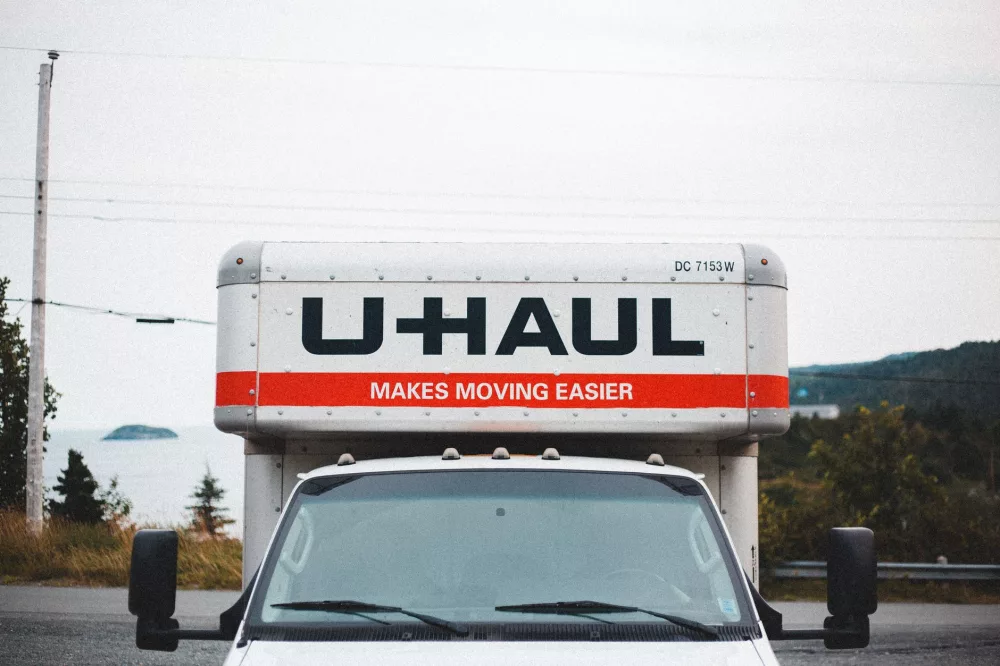
When one contemplates the act of moving, be it across town or across state lines, a particular orange and white logo often springs to mind. I'm talking, of course, about U-Haul. This isn't just another rental service; it's practically synonymous with the entire process of relocation for millions across North America. From my perspective, its ubiquity and enduring presence in the fabric of personal transitions make it a fascinating subject for examination.
The Genesis of a Moving Solution
The story of U-Haul begins, quite humbly, in 1945. Leonard Samuel Shoen and his wife, Anna Mary Carty Shoen, started the company in Ridgefield, Washington. I've always found it intriguing how some of the most impactful businesses begin with such simple observations: people needed a way to move their belongings affordably and conveniently. Post-World War II, with gas rationing lifted and a baby boom underway, families were on the move, chasing new opportunities and settling into burgeoning suburbs. Mr. Shoen, witnessing this dynamic, recognized an unmet demand for accessible moving equipment.
His initial approach was quite ingenious. Rather than building a massive fleet from scratch, he pioneered a one-way rental system, which, at the time, was revolutionary. You could pick up a trailer in one city and drop it off in another. This wasn't just practical; it was a stroke of logistical brilliance that transformed a local need into a national solution. What an innovator! The early U-Haul 'fleet' consisted of trailers rented out from gas stations, establishing a dealer network that's still a cornerstone of the business today. It wasn't long before trucks joined the trailers, expanding the company's offerings and solidifying its market position.
A Comprehensive Suite of Services
U-Haul's operations have expanded far beyond just renting trucks and trailers; they've truly become a one-stop shop for virtually every moving-related necessity. It's not just about the vehicle anymore; it's about the ecosystem supporting the move. I've seen firsthand how their service portfolio caters to a broad spectrum of needs.
Truck and Trailer Rentals
Obviously, the core offering remains their extensive fleet of trucks and trailers. They come in various sizes, from compact pickup trucks and cargo vans, perfect for small apartments or local deliveries, to massive 26-foot box trucks designed to haul the contents of a four-bedroom house. Trailer options are equally diverse:
- Utility trailers: Great for yard work or hauling odd-shaped items.
- Car trailers: Essential for transporting vehicles, whether it's a cross-country move or simply getting a classic car to a show.
- Cargo trailers: Fully enclosed, providing protection from the elements.
The sheer accessibility of these options is what really sets them apart, in my opinion. You can find a U-Haul rental almost anywhere.
Self-Storage and U-Box Solutions
Beyond transportation, U-Haul recognized that moving often involves storage. Their self-storage facilities dot the landscape, providing secure, climate-controlled environments for temporary or long-term keeping of belongings. I think their development of the U-Box portable storage container service was particularly forward-thinking. This offering allows customers to:
- Have a container delivered to their home.
- Load it at their leisure.
- Have U-Haul transport it to a new location or a storage facility.
- Unload it when ready.
This flexibility is incredibly valuable, especially for those with complex moving timelines or who need a bridge between homes.
Moving Supplies and Ancillary Services
It's not just about the big items; U-Haul sells practically everything one might need for packing. Boxes of all shapes and sizes, packing tape, bubble wrap, furniture pads, appliance dollies – you name it, they likely have it. This convenience cannot be overstated. Imagine having to hunt down all these items from separate retailers during the already stressful period of a move. Moreover, they offer hitch installation services, propane sales, and even assistance with hiring local moving labor. It seems they've thought of everything to alleviate the burdens of relocation.
"A move is rarely just about getting from point A to point B. It's a complex process involving packing, lifting, securing, transporting, and often, storing. U-Haul's holistic approach addresses these multi-faceted demands, aiming to streamline what can otherwise be a chaotic experience for its customers."
Operating Model and Customer Experience
The company operates through a vast network of company-owned centers and independent dealers. This hybrid model allows for incredibly widespread coverage, reaching even smaller towns where a dedicated company store might not be viable. I've found that this extensive network is a double-edged sword: it offers unparalleled convenience, yet service quality can sometimes vary between locations. A small, independently owned gas station renting out trailers might not offer the same level of dedicated support as a large, corporate U-Haul Moving & Storage center. That's just the nature of such a broad decentralized system, I suppose.
Booking a rental has become significantly easier over the years. I remember a time when calling around was the norm, but now, their online platform is quite robust. You can reserve equipment, select your pickup and drop-off locations, and even complete much of the paperwork electronically. This digital transformation has greatly improved the initial customer interaction, streamlining the reservation process considerably. It definitely saves a lot of hassle and time.
However, anyone who has moved can tell you that the actual pickup experience can sometimes involve waiting, or perhaps the specific truck size you wanted isn't available precisely when you arrive. It's part of the logistical dance of managing thousands of rentals daily. Despite these occasional hiccups, the core promise of providing accessible, self-service moving options generally holds true.
The Enduring Legacy
U-Haul has grown into a corporate giant, yet its fundamental mission seems largely unchanged: to make moving easier and more affordable for the average person. It has undoubtedly shaped the landscape of personal transportation and storage for decades. When I think about the sheer number of life events – graduations, new jobs, family expansions, fresh starts – that have involved a U-Haul truck or trailer, its impact truly feels immense. It's more than just a brand; for many, it represents a rite of passage, a vehicle for new beginnings, a silent partner in the often-turbulent journey of change. I think that's why it resonates so deeply in the American consciousness; it supports personal freedom and mobility in a very tangible way. It’s certainly come a long way since those first few trailers were hitched up in Washington.